
DC, Maryland & Northern Virginia

Indoor Air Quality Testing That Shows What You’re Actually Breathing

Indoor air quality issues often go unnoticed but can cause serious respiratory and allergic reactions over time. From mold spores and VOCs to dust, pet dander, and formaldehyde, our advanced testing reveals what’s truly circulating through your home’s air — and provides solutions for cleaner, safer breathing.

Why Indoor Air Quality Matters

Trapped Contaminants The air inside your home can contain 2 to 5 times more pollutants than outdoor air. Sealed homes and HVAC recirculation can trap allergens and chemicals.
Health Impacts Poor indoor air quality has been linked to chronic allergies, asthma flare-ups, fatigue, headaches, respiratory infections, and sinus irritation.
The Process

The Indoor Air Quality Inspection Process

Our certified inspectors follow a step-by-step process to deliver accurate, science-backed results:
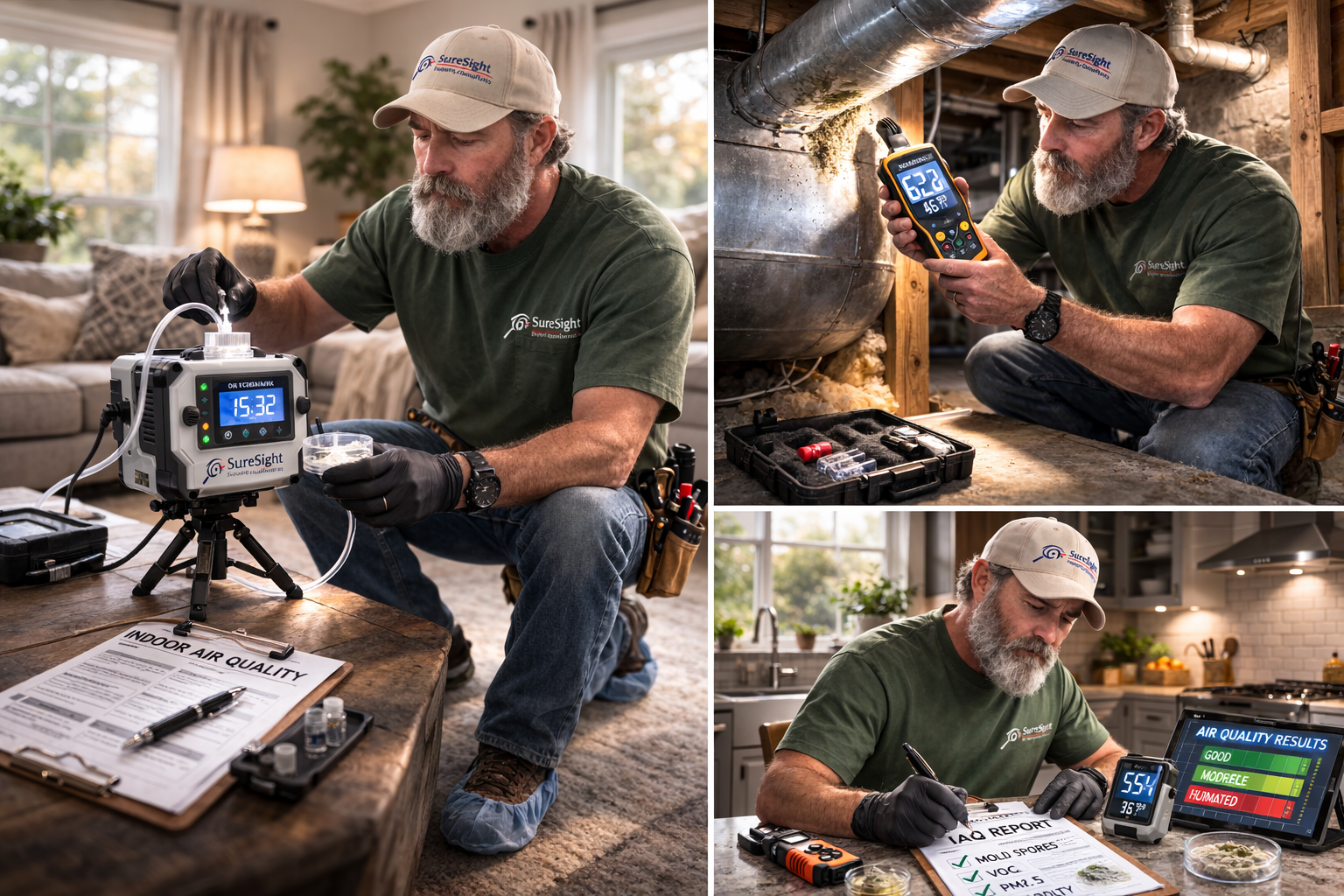
Visual & Environmental Assessment: We begin with a detailed walkthrough, identifying visible moisture, ventilation issues, or musty odors.
Air Sampling & Laboratory Testing: Air samples are collected from multiple areas and analyzed by an accredited laboratory to detect airborne contaminants.
Surface Sampling & HVAC Review: We inspect HVAC filters, ducts, and vents where accessible to check for dust, mold, or debris buildup.
Comprehensive Report & Recommendations: You’ll receive lab results, visual documentation, and personalized strategies for remediation, filtration, and prevention.
Indoor air quality testing visual
Analysis

Common Pollutants We Test For

Our inspection identifies and measures over 40 types of contaminants and particulates, including:

Mold spores and mildew

Airborne and surface samples to detect fungal growth often linked to humidity and moisture.

Formaldehyde (HCHO) & VOCs

Volatile organic compounds from paints, furniture, cleaning products, and building materials.

Particulate Matter (PM2.5 & PM10)

Fine particles from combustion, dust, and outdoor infiltration.

Combustion Gases

Including carbon monoxide and other gases from poorly vented appliances.

Allergens & Debris

Pet dander, pollen, fibers, and microscopic debris circulating in the air.

Humidity & Temperature imbalances

Environmental factors that contribute to mold growth and poor air quality.

Value

Long-Term Benefits of Indoor Air Quality Testing

Healthier Living: Identify and reduce allergens, chemicals, and mold.
Property Protection: Prevent costly HVAC and moisture damage.
Energy Efficiency: Improve ventilation and system performance.
Peace of Mind: Receive a clear action plan for improving indoor air safety.
Packages

Types of Indoor Air Quality Testing

We offer three testing options, depending on the level of inspection detail needed:

Service Level With Home Inspection Standalone
1. Indoor Air Quality Testing
Includes up to 3 indoor and 1 outdoor sample. Tests for particulate matter, VOCs, formaldehyde, temperature, and humidity. Lab report and written inspection summary included.
Est. $549 Est. $599
2. IAQ Testing + Limited Mold Inspection
Includes IAQ testing plus targeted mold inspection (up to 750 sq. ft.). Visual and thermal evaluation for moisture intrusion. Includes 1 surface sample if visible mold is present. Mold Safe Warranty included.
Est. $649 Est. $699
3. IAQ Testing + Complete Mold Inspection
Full IAQ and mold inspection for homes up to 3,000 sq. ft. Comprehensive interior and exterior moisture evaluation. Includes attic (if applicable) and 1 surface sample. Mold Safe Warranty included.
Est. $849 Est. $899

Additional Samples: Est. $45 each | Lab Results: Delivered in 2–3 business days | Additional fees may apply for unfinished areas or larger properties.

FAQ

Indoor Air Quality Inspection – Frequently Asked Questions

What is an Indoor Air Quality (IAQ) Inspection?
An Indoor Air Quality Inspection is a professional evaluation designed to detect airborne pollutants, allergens, and environmental conditions that may affect your family’s health, comfort, and safety. Our certified inspectors use advanced testing and lab analysis to identify contaminants such as mold spores, VOCs, formaldehyde, and particulate matter — helping you understand what’s circulating in your home’s air.
Why is indoor air quality testing important?
Indoor air can contain 2–5 times more pollutants than outdoor air, especially in sealed, energy-efficient homes. Contaminants can cause allergies, fatigue, headaches, and respiratory issues. Testing helps you uncover hidden problems and create a plan for cleaner, healthier indoor living — particularly in humid Mid-Atlantic climates like DC, Maryland, and Northern Virginia.
What are the most common pollutants found in homes?
Our IAQ testing screens for over 40 contaminants, including mold spores and mildew, Volatile Organic Compounds (VOCs) and formaldehyde, particulate matter (PM2.5 & PM10) from dust and combustion, carbon monoxide and other gases, pet dander, pollen, and fibers, and moisture and humidity imbalances. These pollutants can accumulate from building materials, furniture, cleaning agents, or HVAC systems — and may worsen over time without proper ventilation and maintenance.
How is the inspection performed?
Our process includes: 1. Visual & Environmental Assessment to identify visible moisture or musty odors. 2. Air Sampling & Laboratory Testing analyzed by an accredited lab. 3. Surface Sampling & HVAC Review to inspect accessible ducts and vents. 4. A Comprehensive Report & Recommendations so you receive actionable strategies for improving your air quality.
What are my testing options and pricing?
We offer three service levels: 1. Indoor Air Quality Testing (Est. $549 with Home Inspection / $599 Standalone) testing for VOCs, formaldehyde, and particulates. 2. IAQ Testing + Limited Mold Inspection (Est. $649 / $699 Standalone) which includes 1 surface sample and a Mold Safe Warranty. 3. IAQ Testing + Complete Mold Inspection (Est. $849 / $899 Standalone) for a full moisture evaluation and attic inspection. Additional samples are $45 each.
How long does the inspection take?
Most IAQ inspections take 1–2 hours depending on property size and sampling scope. Lab results are typically available within 2–3 business days, with a full digital report and expert recommendations provided upon completion.
Who should schedule an IAQ inspection?
Indoor Air Quality Inspections are ideal for homeowners experiencing allergies, odors, or humidity issues; homebuyers wanting to ensure the air quality of a potential property; families with children, elderly residents, or respiratory conditions; and property managers maintaining safe environments for tenants.
Can mold testing be added to an air quality inspection?
Yes. Mold testing is available as part of our Limited or Complete IAQ + Mold Inspection packages. These include air and surface samples, moisture mapping, and a Mold Safe Warranty for added protection.

Breathe easier knowing your home is safe.

Schedule your Indoor Air Quality Inspection today and get the clarity you deserve. Proudly serving Washington D.C., Maryland, and Northern Virginia.


Newsletter

Subscribe to SureSight Property Consultants LLC’s newsletter for the latest updates, tips, and insights into residential home inspections. Be the first to know about industry trends, expert advice, and exclusive offers to help you make informed property decisions.

© Copyright 2026. SureSight Property Consultants LLC. All Rights Reserved.

(Site/Forms: Powered by Oasisprosuite)